

Settling In offers a powerful metaphor for the school’s educational philosophy, and Quaker testimonies that have guided Friends for over three hundred years translate into the daily experience of Princeton Friends School students in countless ways.
“At the time, I may not have appreciated it fully, but looking back, I loved the opportunity to sit with my thoughts and reflect at the end of every week. That has stayed with me.”
Dr. Zonia Rueda, Class of 2011
| What does Settling In look and feel like? |
|---|
|
Each Friday morning, faculty and staff guide students, paired with meeting partners or Taking Care buddies, to find their silence as we walk to and enter our beloved, historic Meeting House. Once seated, we hear a query posed by a middle school student before settling into silence, listening deeply to ourselves and each other as people offer spoken messages into the space. Teachers support students, and meeting partners one another, in remaining settled for this 25 minute practice of reflection. When the time comes to an end, we wave to one another, remaining silent, and our middle school head of meeting invites afterthoughts and dismisses the group. |
| Why do we Settle In? |
|
At Quaker schools, Settling In (Meeting for Worship) is a shared practice of stillness, reflection, and deep listening. Rooted in silence, Settling In provides an opportunity both to search within ourselves for direction and to be present in the community as the individuals we understand ourselves to be. In a busy world, this simple act becomes a radical one; an intentional pause for rest, presence, and meaning. |
| How does Settling In connect to the school experience? |
| Regardless of whether students ever choose to speak in meeting, it seems that the feel for an effectively delivered message, from the ability to recognize the inspiration necessary to breach the silence to begin with, to the appropriate use of story and metaphor and the proper balance between the personal and the general, is developed in all of the students simply as a result of being present at settling in. The evidence for this is in the poetry that students write and then read aloud at our annual Poetry Night, the letters they write expressing concern about human rights and environmental abuses, and the eighth graders' reflections on their elementary education as they graduate each June. Students not only recognize that their voices will be heard, but they learn how to enter into a reflective state of being and how to express what they discover there to the greatest effect. |
Friday Community Time
At a recent NAIS conference, the keynote speaker asked attendees, “When was the last time you sang as a school community? When was the last time you danced together?” Our head of school delighted in responding with “every week since 1987!”
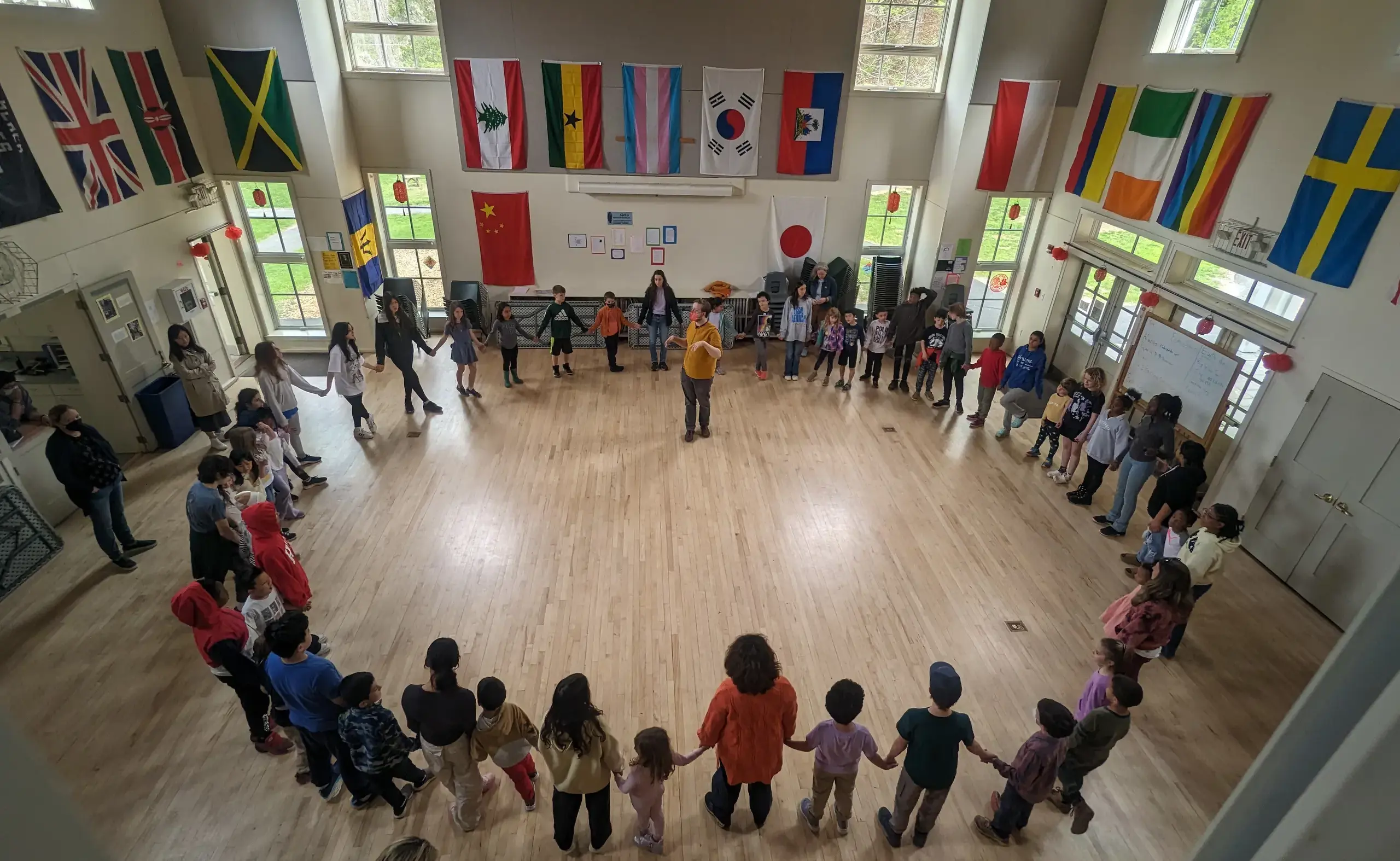
Community time is built into the school schedule every Friday afternoon and is a core set of rituals that bring to life the Quaker SPICES, namely…community! Starting with Settling In in our historic Meeting House, students dismiss to the Great Room for all school singing and dancing.
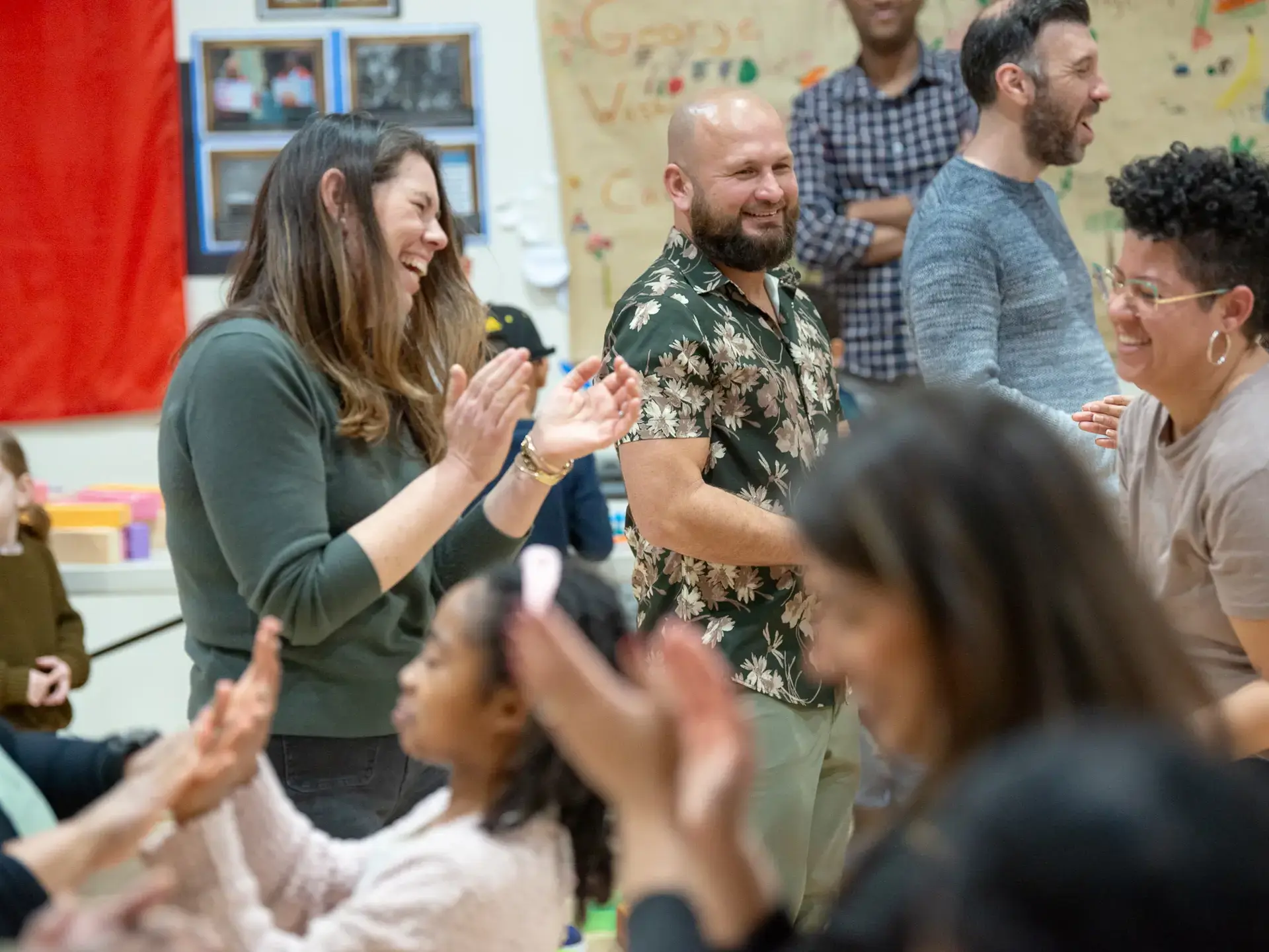
If you want to see and feel palpable joy, join our students, preschool through eighth grade, and staff for all-school dancing where we partake in cultural folk and line dances from around the world. These shared rhythms create more than just fun; they build belonging.
| Read More |
|---|
|
Dancing feet settle for the last part of community time—all-school singing, another joy filled ritual. After acknowledging that week’s student and staff birthdays (or half birthdays) by singing their chosen version of a birthday tune, students open up their music binders to find lyrics to the first of a few student-selected songs for the day. Each student in first through eighth grade has their own PFS Music Binder, a collection of lyrics that has been assembled carefully over the years to include a diverse selection of folk and contemporary songs, ballads, rounds, and holiday music. This time together each week is intentional—we know that singing and dancing with others releases endorphins, increases social bonding, fires neurons in the brain, and strengthens empathy. Through movement, music, and laughter, we deepen our connections across ages and identities—step by step, beat by beat. |
“Music was a big part of Princeton Friends. I was terrified of singing in front of of anyone. I loved music but I was very shy, so I’d pretend to sing in all school signing—a gentle suggestion by a teacher to help me build confidence. I never thought I’d end up on stage for a living as a professional musician.”
Jonah Tolchin, class of 2006