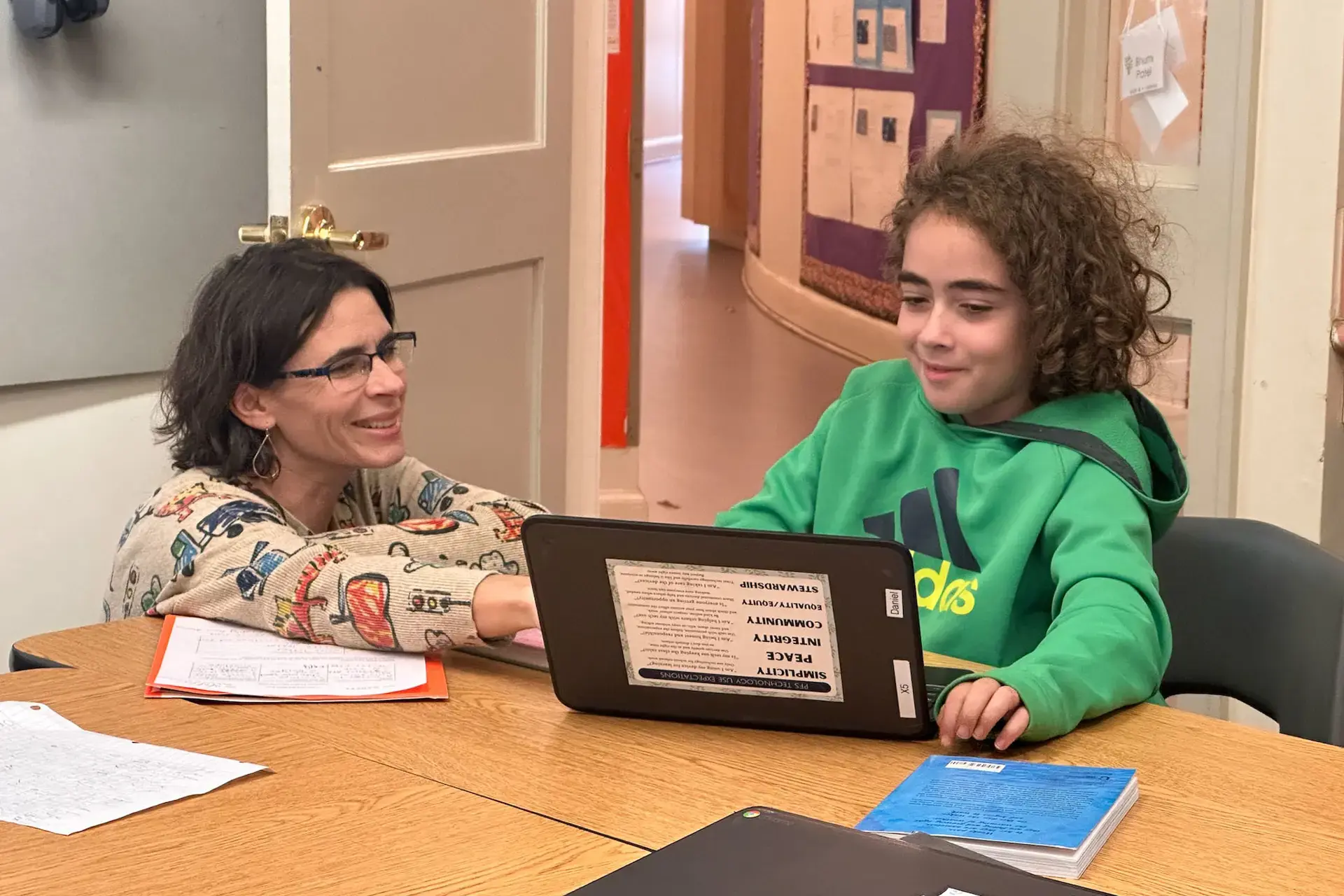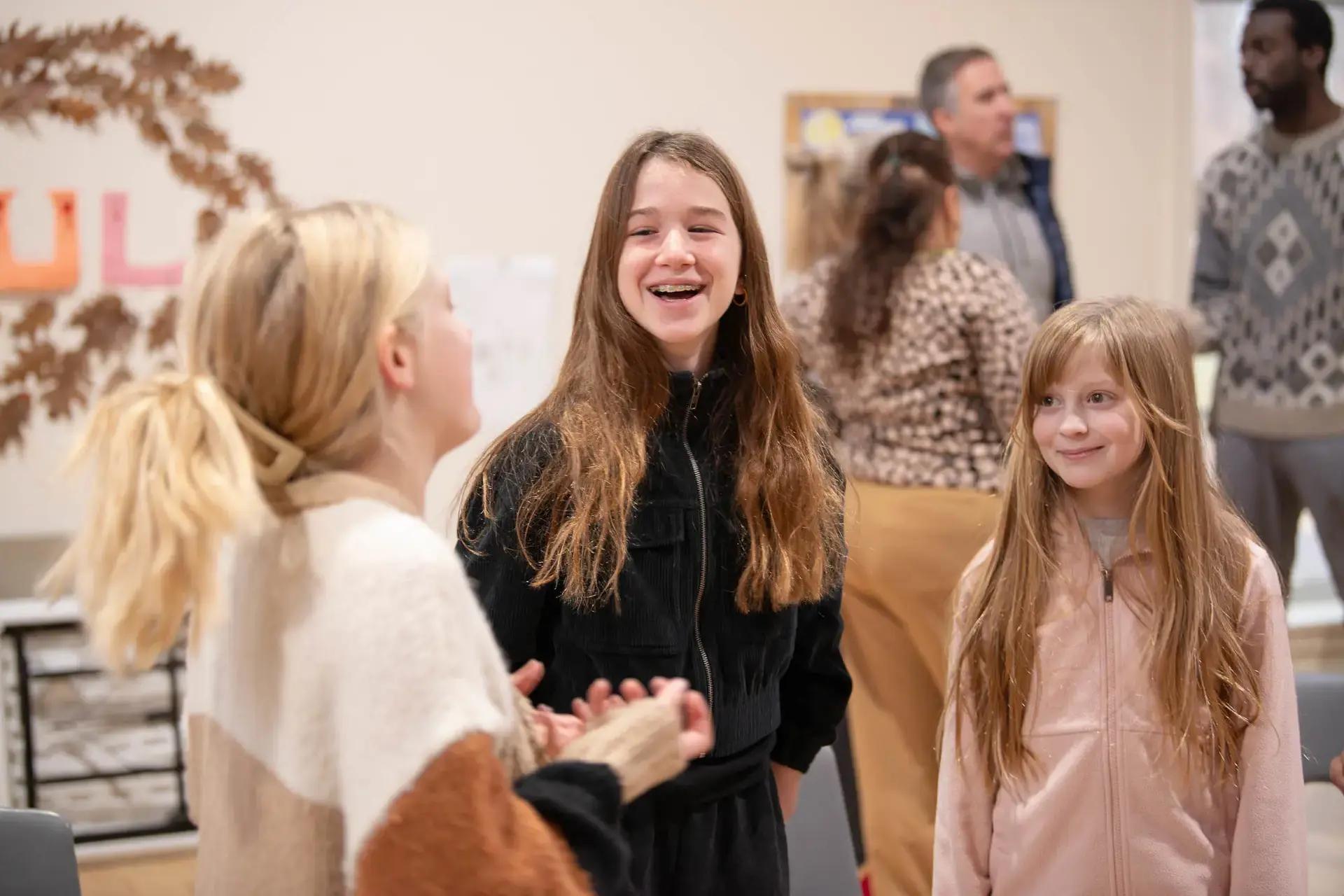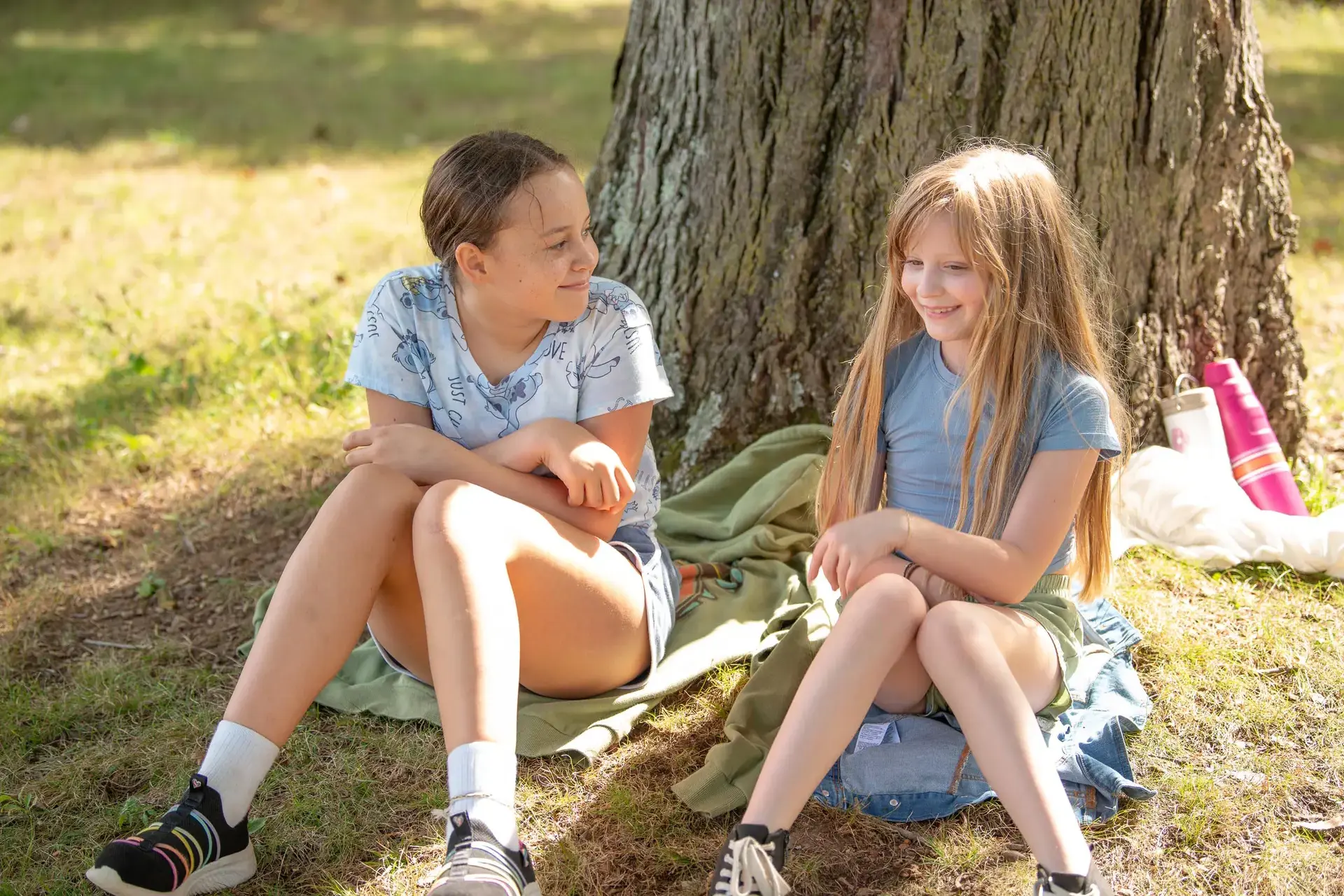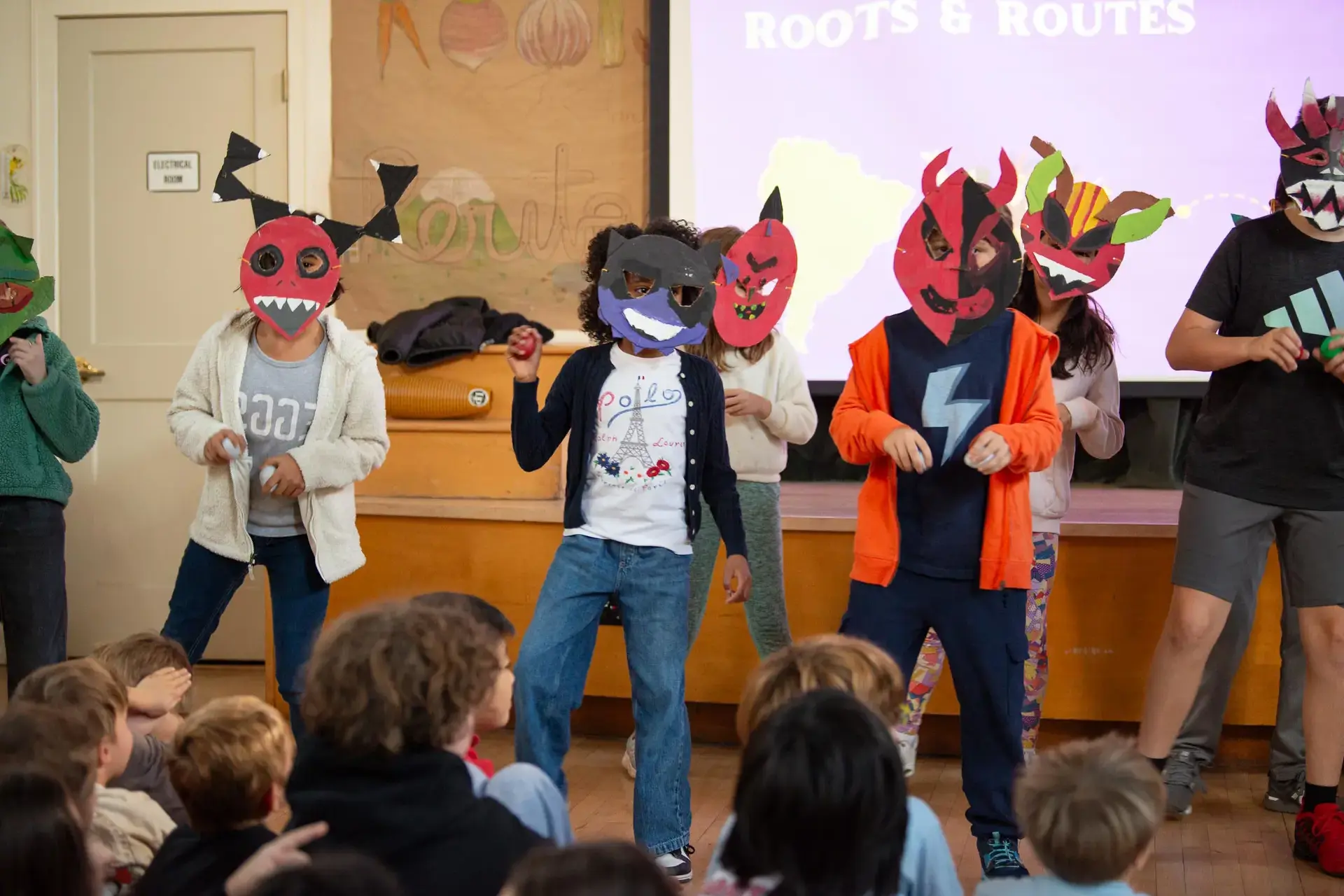

Fourth and fifth grade mark an important transition at Princeton Friends School–where growing minds meet growing independence. Starting in 4th grade, students move from the comfort of a self-contained classroom into a more expansive academic structure that mirrors their intellectual and social development.
During these years, learning is both hands-on and minds-on.
Fourth and fifth grade students are grouped across grade levels for some of their core academic subjects such as English and social studies, providing opportunities to collaborate, challenge one another, and develop the flexibility and perspective that come from mixed-age learning.
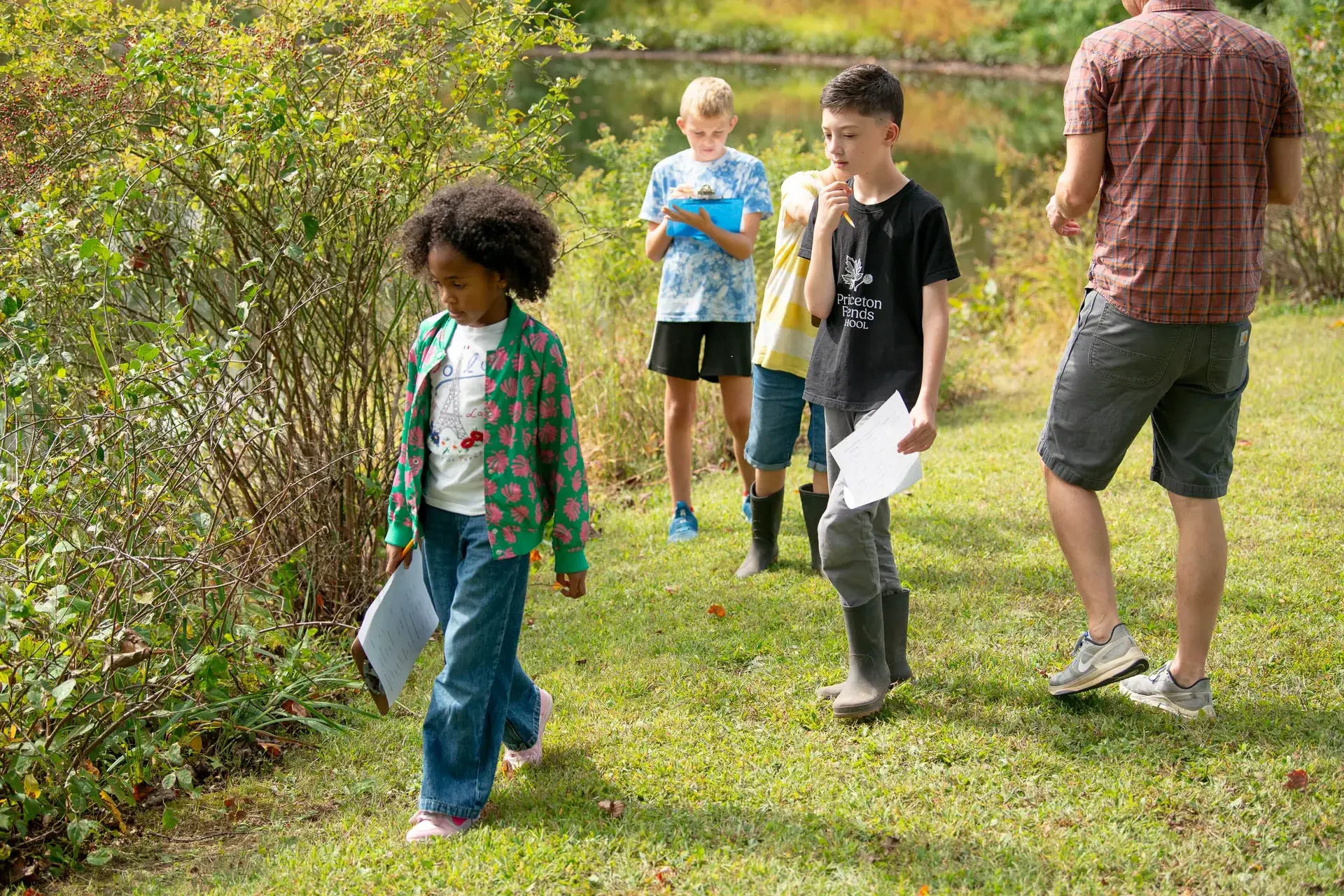
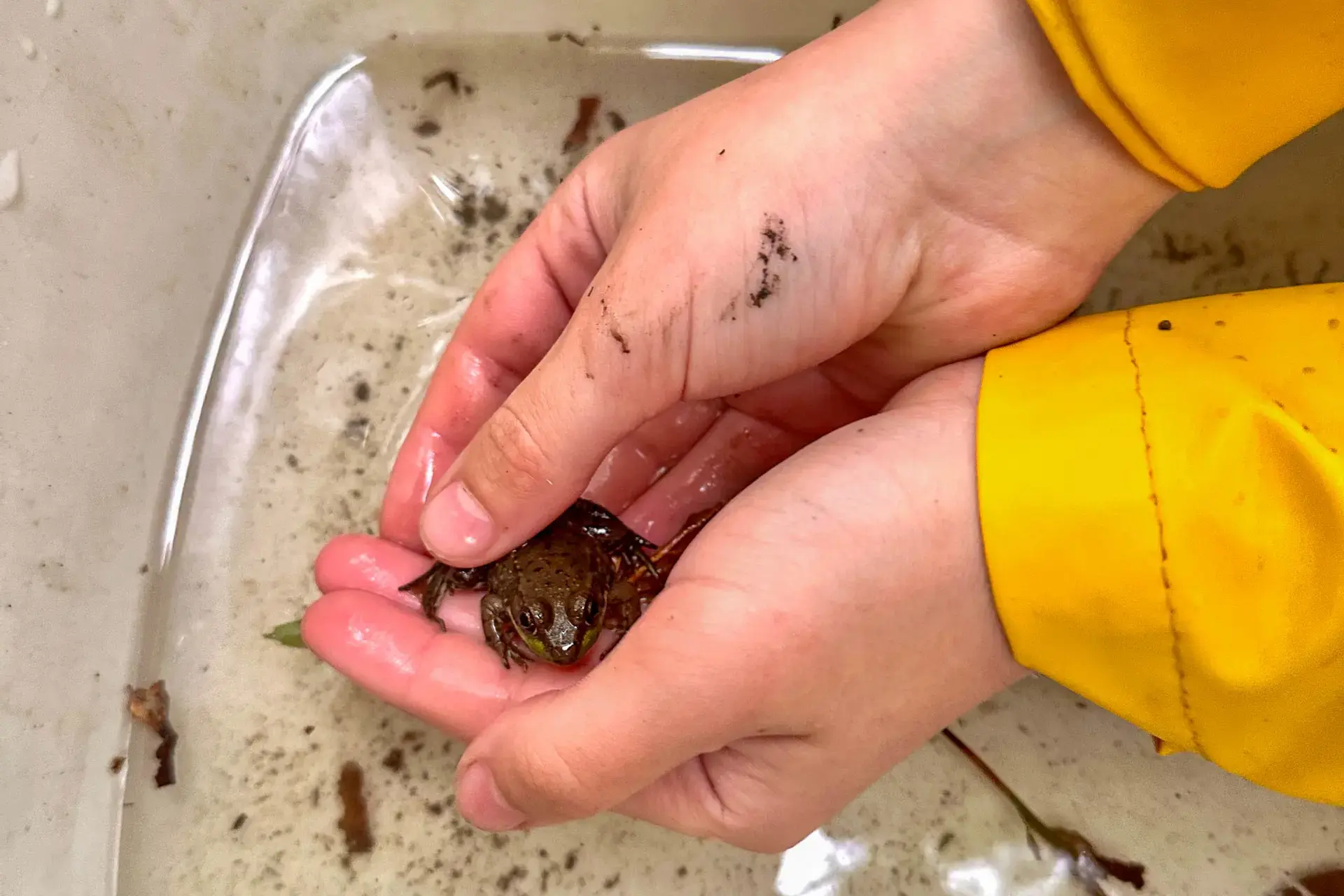
Science classes more regularly venture into the Stony Brook stream and Institute for Advanced Study pond, deepening their connection to the natural world while sharpening analytical and observational skills. In world language, students take a meaningful step toward language proficiency, choosing to focus on either Spanish or Mandarin Chinese for deepened and continued study through eighth grade. This decision invites students to take greater ownership of their learning while continuing to build cultural awareness and communication skills.
Teachers of all subjects design instruction that invites deeper thinking, encourages thoughtful discussion, and nurtures students’ ability to reflect on their own learning.
| Read More |
|---|
|
Our fourth and fifth graders also deepen their ability for choice and voice curricular offerings, selecting from a wide range of physical education and arts electives, including our cycling program, where they receive individualized assessments and training before joining off-campus bike excursions. The fourth and fifth grade years are also a time of broadening community involvement. Students join advisories with their 5th grade peers, helping them feel connected to the wider school community. Each morning, they attend Morning Gathering, facilitated by eighth graders, where they participate in team-building activities, receive schoolwide information and announcements, and begin to see themselves as contributors to the collective life of the school. In all aspects of school life, fourth and fifth grade students are encouraged to think critically, collaborate meaningfully, and act with intention. They are no longer just exploring what it means to be part of a community—they are actively shaping it. With growing academic skills, self-awareness, and confidence, these students are well on their way to the responsibilities and opportunities of middle school.
|
4th & 5th Grade Subjects
| Mathematics |
|---|
|
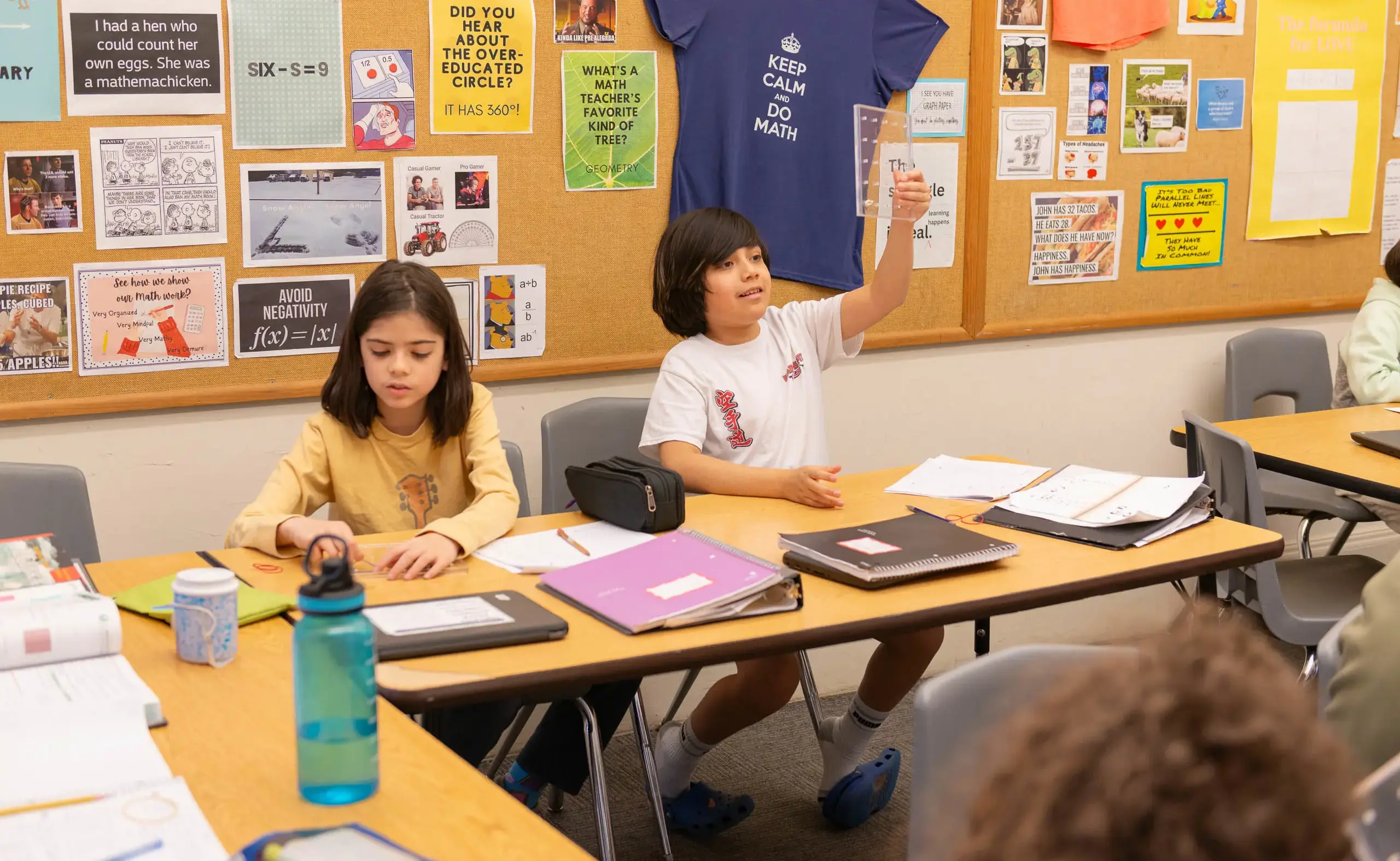
At Princeton Friends School, our approach to math is rooted in curiosity, collaboration, and confidence-building. From the earliest years through middle school, students are encouraged to see themselves as capable mathematical thinkers who can problem-solve, reason, and communicate effectively. In the lower school (grades 1–5), students continue with the Bridges curriculum, which emphasizes hands-on exploration, games, and group investigations. Topics include counting, computation, place value, geometry, and measurement. Instruction is differentiated to meet the needs of all learners and to ensure equitable access to deep, meaningful math learning. Across all grades, PFS math classrooms are dynamic communities where students share strategies, explain their thinking, and develop strong mathematical identities. Our goal is to ensure that every student leaves PFS not only proficient in math but also empowered to approach future challenges with confidence and curiosity. Problem of the WeekAsb part of their math experience, students in grades 4-8 engage in Problem of the Week (POW). These complex problems are fun to do, and each one illustrates an important concept in math or an important moment in math history. Pascal's Triangle is a typical example, as it begins with just adding whole numbers. Its repetitive nature and rapid growth often fascinate younger students. Yet this same problem offers older students an opportunity to work on binomial coefficients, combinations, and advanced topics in number theory. New POW’s are introduced in math classes about once a month, and students are encouraged to continue to tackle them during free time at school or with their families at home. The problems that are presented are often related to topics that students are studying in other subject areas, and through these problems, students encounter mathematical concepts that aren’t normally part of an elementary mathematics curriculum. Above all, POW teaches students that mathematics is a problem-solving undertaking, that many approaches are valid in working toward a solution, and that working with others can be a lot of fun and often leads everyone to a better understanding of the concepts at hand. Try one out for yourself! POW 38-1 Pentominoes and other 'Ominoes.pdf |
| English |
|
At Princeton Friends School, our English program supports students in becoming thoughtful readers, expressive writers, and confident communicators. With an emphasis on storytelling, poetry, and inquiry-based learning, students explore language as a powerful tool for self-expression, reflection, and connection to the world around them. In 4th and 5th grades, students continue to build strong literacy foundations while deepening their understanding of how reading, writing, and speaking are connected. They study a range of texts including folktales, poetry, and short stories, and are introduced to open-ended written responses that encourage critical thinking and perspective-taking. Students begin using Writer’s Notebooks for daily freewriting and are introduced to thesis-based writing and basic essay structure. Vocabulary, grammar, and morphology are taught through engaging, developmentally appropriate lessons. Cross-curricular book studies, in partnership with social studies, enrich their understanding of theme and context. Throughout all grades, our approach fosters a love of language, encourages authentic expression, and supports students in developing the tools they need to think critically, write with purpose, and tell their own stories with clarity and heart. |
| Social Studies |
|
At Princeton Friends School, social studies in grades 4 through 8 emphasizes critical thinking, empathy, and active citizenship. Social studies education provides learners with the knowledge, skills, attitudes, and perspectives needed to become active, informed, and contributing members of local, state, national, and global communities. Integrating social sciences and humanities, social studies prepares students to make informed decisions in a culturally diverse, democratic society within an interdependent world. Rooted in Quakerism, anchored to our annual Central Study theme, and connected to what students are experiencing in the world today, our thematic and inquiry-based approach prepares students to critically consume and produce information in our complex and rich media landscape. We use a two-year curriculum cycle in grades 4–5 and again in grades 6–7, allowing students to explore a range of historical time periods and themes in greater depth. This cyclical approach supports multi-age learning, enables deeper cross-grade collaboration, and allows us to revisit essential questions from multiple perspectives over time. |
| Literature |
|
Each term, students in 4th-8th grades have two class periods per week dedicated to the study of literature. For the fall, teachers choose a text to start the year. In winter and spring terms, we provide a list of titles, and students are able to choose what book(s) they are interested in studying. Other elements of the literature program are as follows:
|
| Science |
|
Science at Princeton Friends School is an inquiry-driven, hands-on program that nurtures curiosity, critical thinking, and a sense of responsibility toward the Earth. Across all grades, students engage deeply with the scientific process—observing, questioning, experimenting, analyzing, and reflecting—while developing essential academic skills that prepare them for future study. In the lower school, science is both indoor and outdoor, with the school’s woods and waterbodies serving as living laboratories. Students act as field scientists, naturalists, and engineers, investigating biology, Earth and environmental science, physics, and chemistry. They build skills in data collection, lab work, scientific writing, and collaboration, while engaging in interdisciplinary projects that connect science with math, art, and more. Throughout all grades, the program emphasizes project-based learning, collaboration, and real-world relevance. Students are encouraged to express their understanding through diverse formats—scientific reports, art, engineering challenges, debates, and group presentations—while developing fluency with scientific vocabulary, tools, and methods. Cross-curricular collaboration is a regular feature, as science classes work with other departments to enrich inquiry and promote deeper understanding. By integrating environmental stewardship, interdisciplinary learning, and joyful exploration, science at Princeton Friends School empowers students to be thoughtful observers, responsible citizens, and confident problem-solvers. |
| World Langauge (Spanish & Chinese Mandarin) |
|
As a progressive school, our World Language program is rooted in the ACEFEL framework—Academic, Cultural, Emotional, Functional, and Linguistic—which supports a whole-child, experiential approach to language learning. ACEFEL guides us in fostering confident, expressive, and globally aware language learners through storytelling, role-play, cultural exploration, and interdisciplinary learning. To complement our ACEFEL foundation, we incorporate key elements of the ACTFL (American Council on the Teaching of Foreign Languages) framework. Specifically, we use ACTFL’s three modes of communication—interpersonal, interpretive, and presentational—as well as its proficiency guidelines to help track student growth over time. These tools provide consistency, clarity, and measurable benchmarks that support our commitment to both individualized learning and high standards in language development. Together, ACEFEL and ACTFL allow us to blend joyful, student-centered learning with clear expectations for growth and real-world communication. |
| Art |
|
Drawing from the work of Jillian Hogan, Lois Hetland, and Diane B. Jaquith, the art curriculum at Princeton Friends seeks to foster eight overarching critical thinking skills that are involved in the process of creation:
|
| Music |
|
At Princeton Friends School, music education is a joyful, immersive journey rooted in exploration, creativity, and community. From the earliest grades through middle school, students engage in a developmentally grounded, culturally responsive music curriculum that nurtures both musical literacy and expression. Music classes in the younger grades combine John Feierabend’s “First Steps in Music” curriculum with elements from Orff Schulwerk, while music classes in the upper elementary grades draw from Orff Schulwerk and the Kodály approach. Music in the Middle School expands its focus beyond music literacy and creation to examine different facets of music history and culture. Each student in 1st-8th grade has their own “Music Binder,” a collection of lyrics that has been assembled carefully over the years to include a rich selection of folk and contemporary songs, ballads, rounds, and holiday music. Students sing from the Binder in class as well as during Friday Community Time. Songs are used as jumping-off points to talk about social justice, the environment, and social-emotional topics. Each year, songs are added to the binder in connection with the Central Study theme. |
| Electives |
|
Whether it’s yoga for athletes, aerial movement, chimes, forest bathing, trail biking, or sewing and designing custom stuffed animals, students have the chance to dive into creative, physical, and skill-based activities that stretch their minds and bodies. Many electives take place outdoors, using our woods and gardens as extended classrooms. Our flexible approach to electives across Physical Education, the arts, and enrichment programming ensures that students are not only engaged, but empowered to shape their own learning journeys. |