

These testimonies have been adapted for schools to support student-facing language that is accessible and actionable.
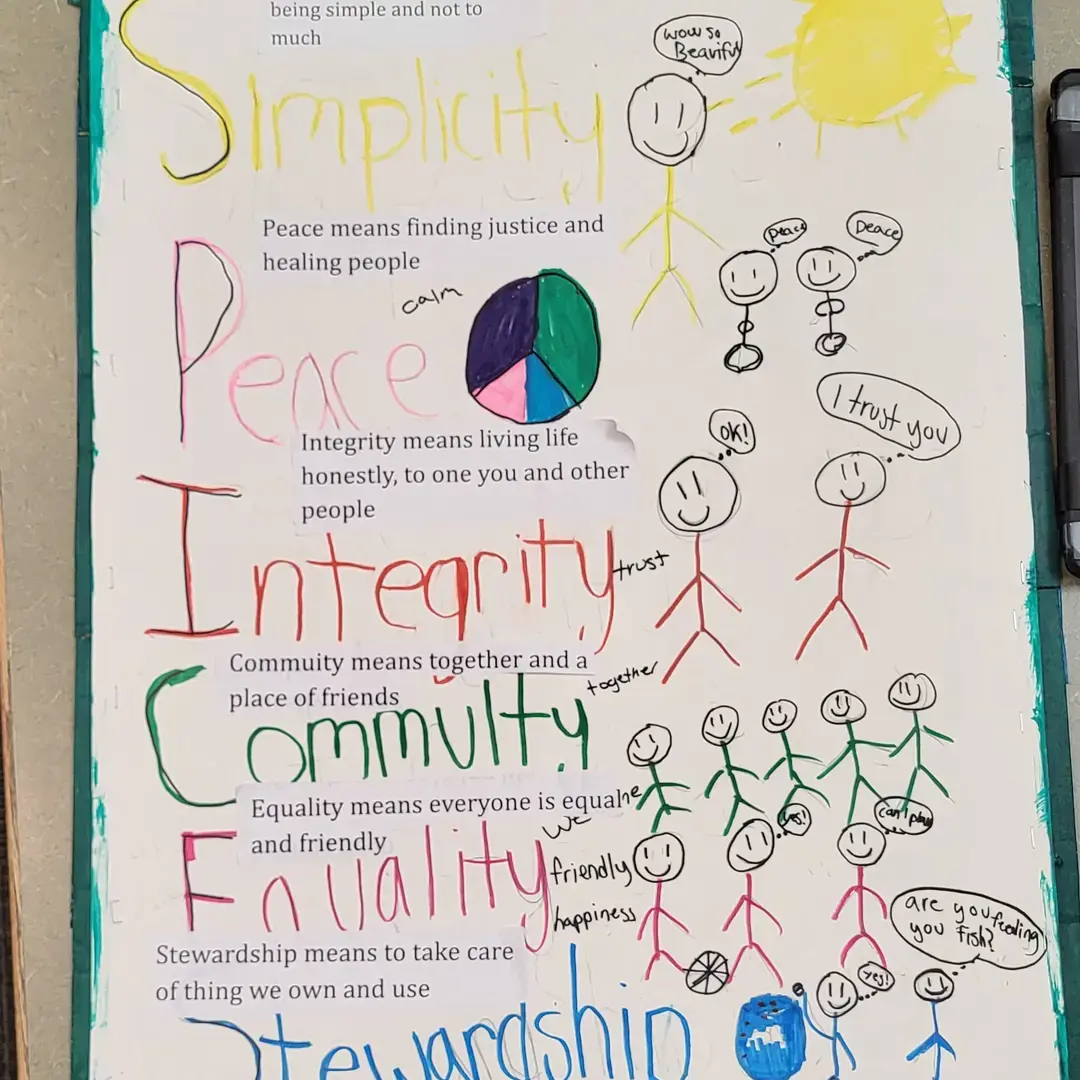
Known as the SPICES—Simplicity, Peace, Integrity, Community, Equality, and Stewardship—these are more than a set of values. They are the living principles that guide our decision-making, relationships, and learning every day. These testimonies grow from centuries of Quaker faith and practice, and we return to them again and again as a compass for how we engage with one another and the world.
We do not teach SPICES as rules to follow, but as ways of being that are open to continuing revelation, reflection, and personal growth. As students grow, so does their understanding of what it means to live with integrity, seek peace, and care deeply for our community and the earth.
Each testimony supports our commitment to nurturing the whole child, and collectively they shape the culture of Princeton Friends.
| Simplicity |
|---|
|
We strive to focus on what truly matters. In a world filled with noise and distraction, simplicity helps us clear space—for creativity, for reflective thinking, for meaningful presence with one another. In our classrooms and in our community, we practice simplicity by honoring purposeful work, resisting excess, and making mindful choices that reflect our values. An example of simplicity in action at Princeton Friends looks like the architecture of our buildings and set up of our classrooms that limit excess and distractions in order to center student voice and creations. |
| Peace |
|
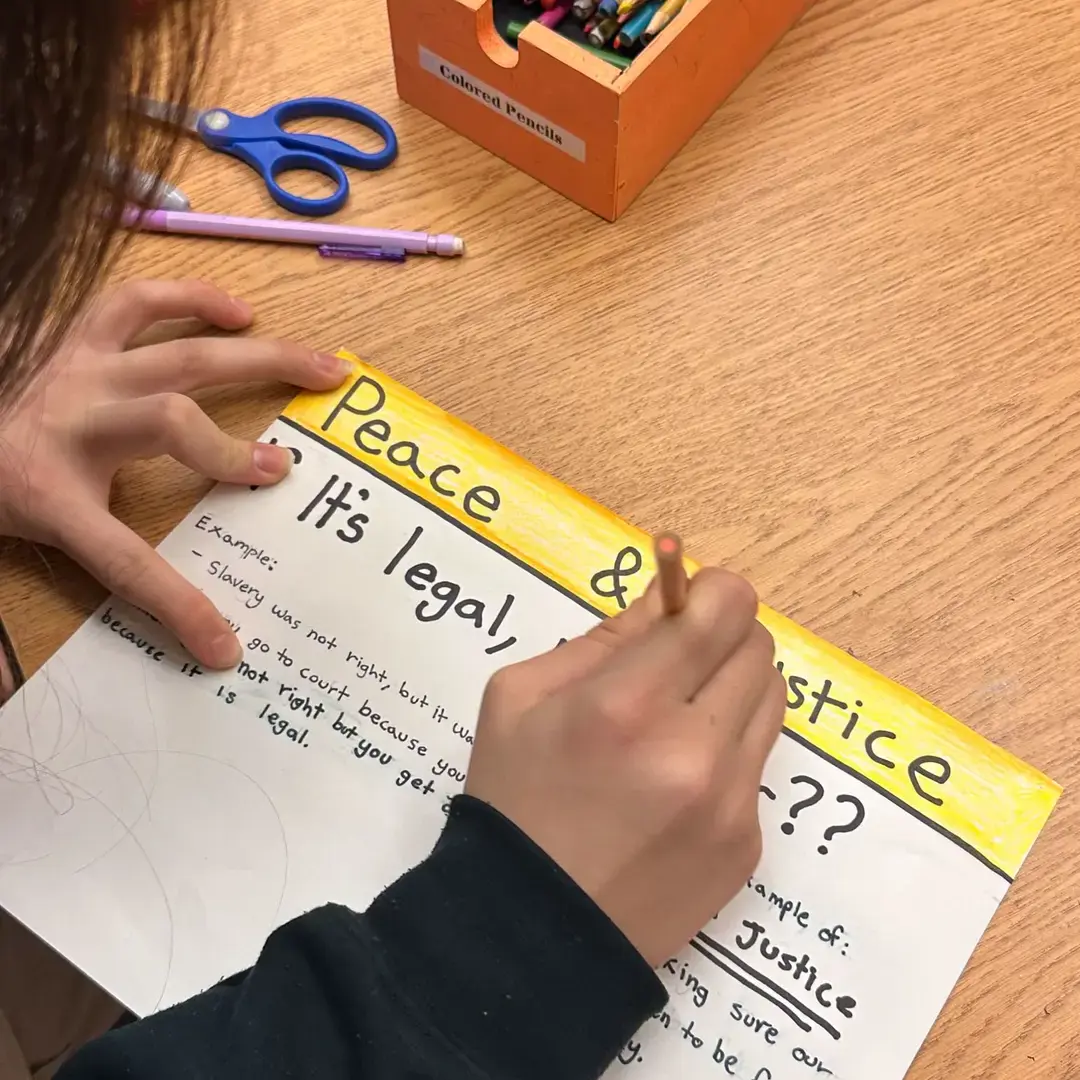
Peace is more than the absence of conflict; it is an active practice of empathy, dialogue, and repair. At Princeton Friends, students are supported in learning to solve problems collaboratively, to listen with care, and to stand up against injustice, preparing them to be thoughtful, compassionate change-makers. An example of peace in action at Princeton Friends looks like pausing for Peace & Justice Day each January to engage in service learning opportunities and reflect on the ways peace and justice are interconnected and how we can make conscious choices to embody both as the school year progresses. |
| Integrity |
|
We encourage students to be their authentic selves—and to act in alignment with their beliefs, even when it is hard. Integrity means being honest, responsible, and consistent in word and deed. As a Quaker school, we believe that truth is not imposed, but revealed through reflection, experience, and inner guidance. We support each student in discovering their own inner teacher. An example of integrity in action at Princeton Friends looks like utilizing a restorative approach to discipline that engages students in reflection and repair, never punitive in nature. |
| Community |
|
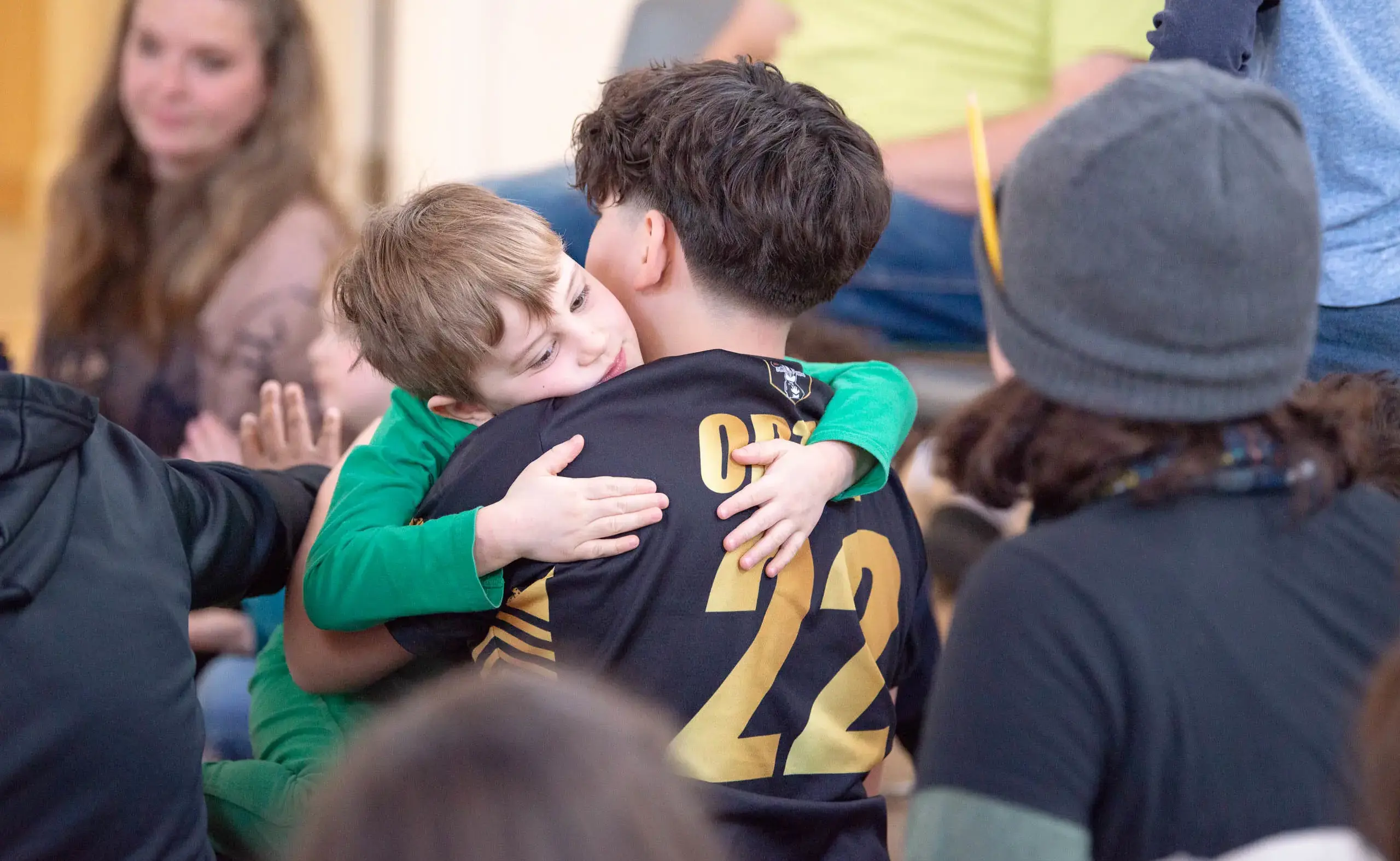
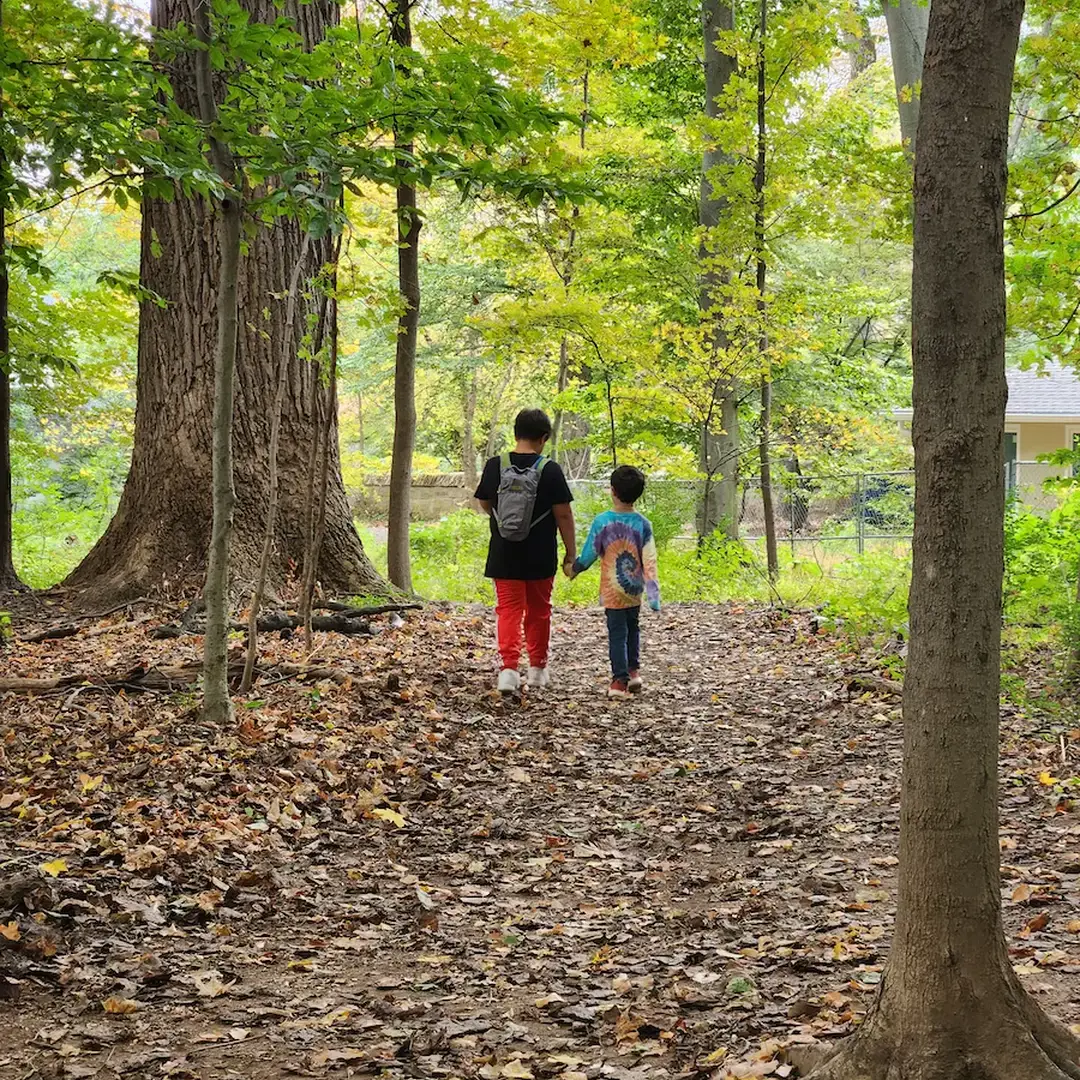
We are a school rooted in relationships. The testimony of community invites us to see ourselves as part of something larger: a class, a school, a local and global network of people working together. We take time to nurture connection across ages and identities, and we recognize that our strength lies in our interdependence. Whether during all-school Gatherings, service projects, or moments of everyday kindness, we cultivate a culture of belonging. An example of community in action at Princeton Friends looks like watching a preschool and seventh grade meeting partner pair walk from Settling In to all school dancing together, hand in hand, and excitedly engage in learning a new folk dance together. |
| Equality/Equity |
|
We believe that every person has an inner Light—an inherent worth and a unique voice. The testimony of equality/equity challenges us to examine systems of power and privilege and to work toward a world where everyone has access to opportunity and dignity. An example of equality in action at Princeton Friends looks like a group of students and faculty engaging in meaningful conversations about the Declaration of Human Rights, where each learner feels seen, heard, and valued through the conversation as they share inequities in their own access to those rights. |
| Stewardship |
|
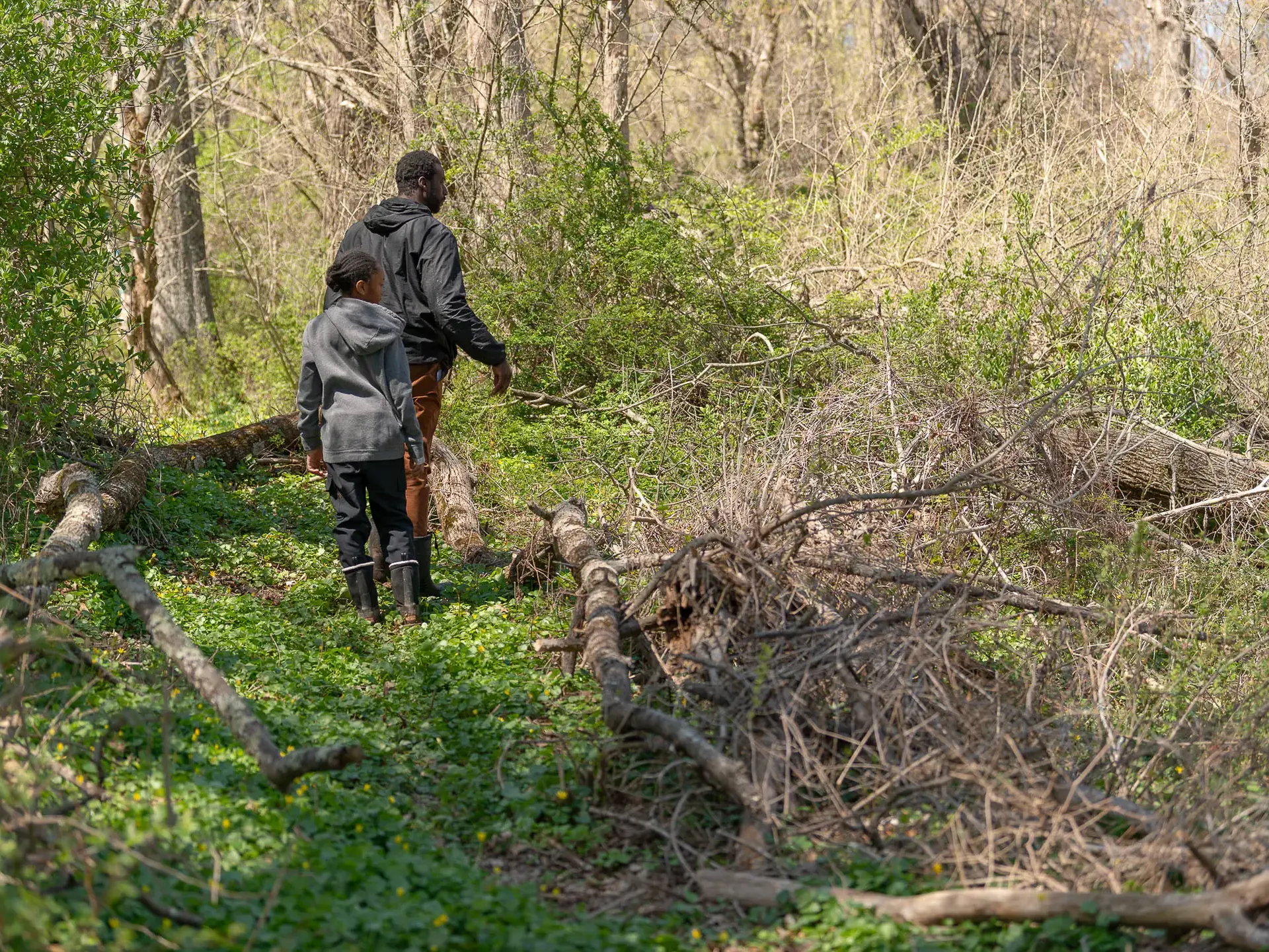
We are caretakers of the earth and of one another. Stewardship calls us to use our resources wisely, to care for our natural environment, and to act with sustainability in mind. On our wooded campus, students learn through direct experience—which includes plenty of play—how to respect and protect the land—and how small choices can have a big impact. Stewardship also means taking responsibility for our shared spaces, our time, and our relationships. An example of stewardship in action at Princeton Friends looks like the entire school community pausing classes for the day to walk to the Stony Brook stream to first skip rocks, splash, and search for crayfish before working together to clean up the stream and banks. |
Living the Testimonies
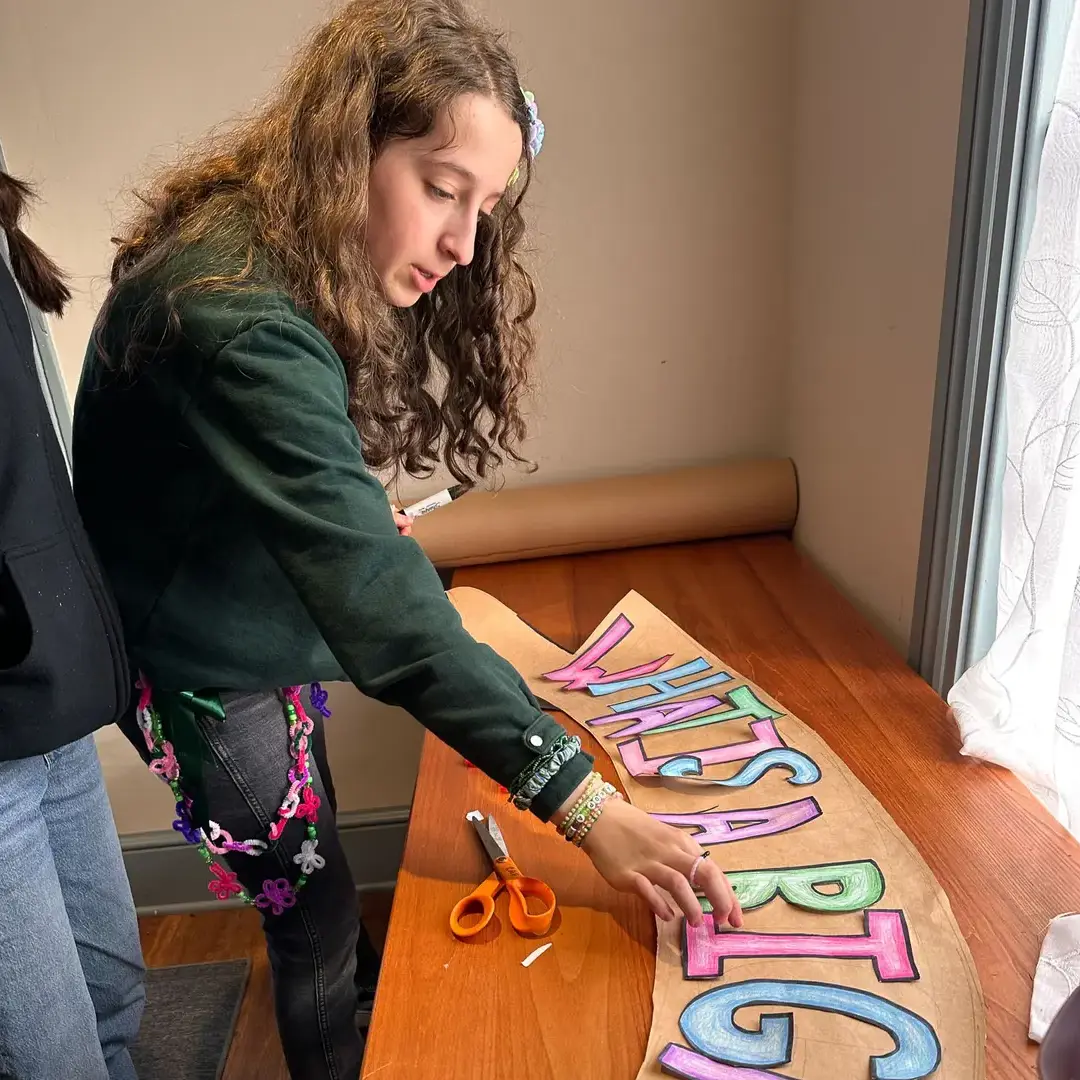
We return to the SPICES not just in philosophy but in practice—through everything from the way we set up our student schedule, facilitate classroom discussions, engage in service learning, reflect during silent meeting, support conflict resolution, and facilitate meetings and events. The testimonies help us build a school culture that is grounded, intentional, ever-evolving, and full of compassion.
As students grow at Princeton Friends, so too does their understanding of how these values shape who they are becoming—and the world they wish to create.